Episode Transcript
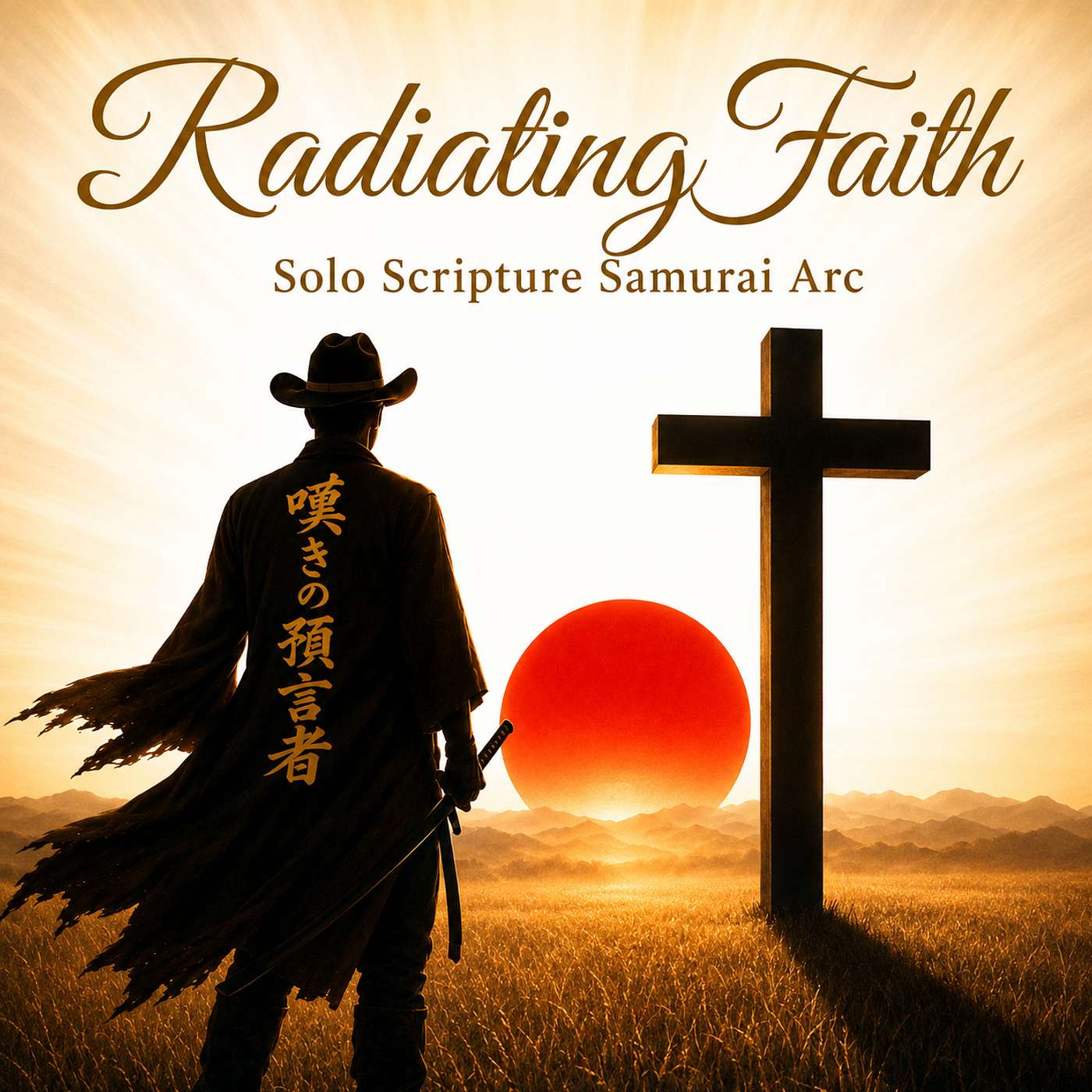
<p><!--block--> Ladies and gentlemen, welcome back to Couple of Nooks, the podcast. And today's episode is part of an ongoing ministry sub-series, the Solo Scripture Samurai Arc, based on ministry and sermons inspired by my time here in Japan, where I am exploring Christian evangelism, Christian history, and other mental health and faith-based, uh, matters here in Japan, as well as other parts of the culture. This sermon is not as majorly Japanese-themed, but it's very interesting. I was on the train when I got inspired. See, recently, I did a sermon just the other day about kintsugi, and I talked about how kintsugi, which is a Japanese craftsmanship practice of repairing broken pottery with lacquer and gold, you know, I talked about the biblical parallels with that, and then the step further of redemption and new creation that God does in our lives. And so in the midst of that sermon, I spoke about Ezekiel thirty-seven, the Valley of Dry Bones. It was something that I had read before, of course, but it was something that I had forgotten about. And while researching, you know, for the kintsugi sermon, I came across it again. And I, you know, I used it in that sermon, but when I was on the train, and this is so important, y'all, 'cause I wanna talk about silence and being still. That is a big thing. That, that has been like the number one lesson God has kind of repeatedly put into my life this summer through Aggie Park and Steve Wright and other people that I've been having conversations with. And it's really been about the be still and know that I am God, and that being still isn't being still with AirPods in or other distractions. And, you know, Japan is a great place and example of how much consumerism and distraction there is. And I don't say that to villainize or diminish Japanese culture, but everywhere you go, there are so many colorful posters and, you know, digital advertisements and, you know, everywhere you go, uh, the Ubers have, uh, TVs in the back. The taxis have a TV in the back playing commercials the whole time. You know, everywhere you go, there's noise and color and so much, uh, at least, you know, city-side and commuter-side once you get to the more rural areas. But even then, you know, there's a, a lot of consumerism and- Between that and then everyone on their phone, uh, you know, and this is a problem in America, too. I've talked before on the podcast about people being on their phone while driving in America. I see them watching TikToks, scrolling. Uh, they have a mounted phone stand right by the steering wheel. And so it is a global issue as much as it is definitely very prominent here in Japan. You know, like I said before on this podcast, I'll be trying to scan my train ticket to, you know, the, the card I have to get into the station, and people are walking in front of me hunched over watching anime, playing video games, uh, reading manga, whatever it is they're doing on their phone, texting, and people are just so locked into these devices. Being still and hearing God is so important. People dedicate prayer time to talk to God, and I respect and appreciate that. However, there's times throughout the day where God is trying to talk to us outside of prayer or He's trying to be a part of our life. And I had been on my phone for quite a bit on the train on, uh, just the other day here, just, like, maybe a day or two ago, and I took a break from it to just look out the window and stuff, and I, I was just thinking and reflecting, and I, I just felt the Holy Spirit really move on me and, and really say, "That's it for the valley of dry bones?" Such a powerful, miraculous moment in the Bible that people don't ever talk about, and that's it. And I felt the Holy Spirit just say, "Look around at, at how much people care about their skin and how dry it is." See, uh, oftentimes on the train you'll see women adjusting their makeup with their little handheld mirrors or actually some of the women... It was pretty cool. I saw a woman had-- Her phone case was a mirror, so she could do her makeup at all times, but really spoke to me. Now, of course, there are beauty products around the world. E- every country has its own, you know, renditions and whatnot, but the Asian countries are mostly well-known among all the other countries for their amazing, you know, beauty and skincare products. When I came to Japan, people were asking me to bring back sunblock and different facial creams and anti-wrinkle stuff and, you know, all this stuff to help with their skin, to help with how wrinkled it is or especially how dry it is. There are so many different types of lotions here. And again, that's every country, but especially over here in Japan and Korea. And I just, I just felt this thing saying, you know, people care so much about their dry skin, but what about their dry bones? Their very dry bones And that comes from that chapter in Ezekiel, which we're gonna go over and read today. And I wanna give a little historical context. And so, you know, I just really felt God saying, like, "You've got more related to that, that valley of dry bones than just that Kintsugi's line you gave." You know, 'cause I, I did read it for the Kintsugi sermon, and it was part of it, but, you know, God really just nudged me when I was in the train saying, "There's more to it." And so that's where this sermon came from. And before we dive into it, I really wanna get a little bit of context for y'all, especially for anyone who hasn't read Ezekiel or maybe you're not a believer at all. Great to have you here. Ezekiel is one of my favorite sections of the Bible, and I know I say that about a lot of sections, but there's a particular part of Ezekiel that just breaks my heart, you know, where, where God likens the land to this woman that he found, you know, kind of basically naked and helpless, and he clothed her, and he gave her great things, and then she took all that he gave her, and then she went and whored out to other nations. And w- when you read the full description, it- it's really heartbreaking. Ezekiel is also one of my most referenced sections of Bible when I'm talking to people about bystanderism and how God calls us to not be bystanders. And I'm not gonna get into that right now 'cause I don't wanna take away from the main message. But I wanna get into Ezekiel, you know, looking at his ministry, which took place during Judah's rebellion, you know, at this time Jerusalem's destruction and in the Babylonian exile. And so earlier in this section of Ezekiel, God repeatedly identifies Israel's idolatry, their bloodshed, their covenant infidelity, false worship, and refusal to listen as reasons for judgment. And, you know, that's a lot of the Old Testament. We see the people continually going astray from God And before this is Ezekiel 36, which is really important because some of the quotes from Ezekiel 36 are some of the most well-known verses of scripture. So we're gonna get into it. Now, we're gonna read Ezekiel 37, but I'm gonna give some pre-context that the dry bones primarily represent hopelessness and death resulting from judgment, and that judgment itself is what came from Israel's prolonged unfaithfulness. So the bones represent both of those, but on different levels, and those are important because we're gonna talk about how that applies to us on a personal level. You know, I'm gonna be talking about in Ezekiel 37 is on a specific group of people, but we're gonna get into what, what if we have dry bones in our lives, very dry bones. And so Israel had defiled the land by his conduct. We know that. So unfaithfulness led to judgment, which led to exile, devastation, hopelessness, and we'll get into Ezekiel 37, but this is right after Ezekiel 36, and you look at that and you see in Ezekiel 36:26, "I will give you a new heart and put a new spirit in you." And so this is really important when you look at what happens in the Valley of Dry Bones, which we're gonna get into, but a brief overview, they receive the breath of life and li- they, you know, God's spirit is put into them. And so let's go ahead and get right into Ezekiel 37 before we go any further. I'm gonna read the whole section verbatim here from the New International Version of the Bible. And so it's titled in the New International Version, The Valley of Dry Bones, and so let's get into it. "The hand of the Lord was on me, and he brought me out by the Spirit of the Lord and set me in the middle of a valley. It was full of bones. He led me back and forth among them, and I saw a great many bones on the floor of the valley, bones that were very dry. He asked me, 'Son of man, can these bones live?' I said, 'Sovereign Lord, you alone know.'" Then he said to me, "Prophesy to these bones and say to them, 'Dry bones, hear the word of the Lord. This is what the Sovereign Lord says to these bones: I will make breath enter you, and you will come to life. I will attach tendons to you and make flesh come upon you and cover you with skin. I will put breath in you, and you will come to life. Then you will know that I am the Lord.' So I prophesied as I was commanded, and as I was prophesying, there was a noise, a rattling sound, and the bones came together bone to bone. I looked and tendons and flesh appeared on them and skin covered them, but there was no breath in them. Then He said to me, 'Prophesy to the breath. Prophesy, son of man, and say to it, "This is what the Sovereign Lord says: Come, breath, from the four winds and breathe into these slain, that they may live."'" So I prophesied as He commanded me, and breath entered them. They came to life and stood up on their feet, a vast army. Then He said to me, "Son of man, these bones are the people of Israel. They say, 'Our bones are dried up and our hope is gone. We are cut off.' Therefore, prophesy and say to them, 'This is what the Sovereign Lord says: My people, I am going to open your graves and bring you up from them. I will bring you back to the land of Israel. Then you, my people, will know that I am the Lord when I open your graves and bring you up from them. I will put my spirit in you and you will live, and I will settle you in your own land. Then you will know that I, the Lord, have spoken and I have done it,' declares the Lord." And so ladies and gentlemen, we see in the 14th verse here it says, "I will put my spirit in you," which directly echoes what we just discussed in Ezekiel 36, right? New heart. Put my spirit in you, a new spirit. And so we see the importance of this. You know, the dead people receive breath and live, you know? In, in Hebrew that, that breath is, and I may be pronouncing this wrong, but it's ruach, which is a spirit wind of breath. You know, it is, is the combination of God's word and spirit. And you know, Ezekiel has even commanded, it says, "Prophesy to the breath." Uh, not just to the, the bones and the b- dead body, but the breath is required to make it actually happen. Now, as part of the Solo Scripture Samurai arc, I've been doing the quotes of scripture in Japanese as well, including the one we heard earlier in this very sermon. I'm not gonna do all of Ezekiel 37, of course. That's a long passage of scripture. However, there is one particular line that I really enjoy. Some people read it as exhaustion, as defeat, as wanting to hope, but maybe not wanting to be too optimistic. Some of it people say it is the ultimate respect. I wanna do this particular line in Japanese as well because I think it's so powerful: Sovereign Lord, you alone know. And in Japanese that would be, ""And I think that's really powerful. That's what stands out to me the most out of the valley of dry bones. Now of course you're wondering why we're talking about dry bones, and again, I was on the train. You know, I was thinking, "Everyone's worried about their skin. Is my skin dry? Do I have eczema? I need to get Botox. I need anti-wrinkle cream." Lotion all over the place, like I mentioned. But I wanna ask you brothers and sisters of Christ this more vital question about dryness. You have to ask yourself, "Are my bones dry?" And I know y'all are probably looking at me funny like, "What does that mean?" You know? And I'm not talking about osteoporosis. I've given you the context now of the valley of dry bones. The dry bones mean more... It's not a physical condition, right? Obviously we can't see if our bones are dry, but I want you to think about it in parallel with this deep spiritual calls that we're gonna be getting into. And it's really important too because- One, we see that they're not just dry bones, they're very dry bones. The emphasis on the very dry partnered with hopelessness really shows you, especially in the historical context of what is happening right now in history during Ezekiel 37, how important this is. And again, we're gonna put this on a personal level. Very dry is so important. It intensifies that picture, you know, because there's dead bodies, and we see resurrection throughout the New Testament, resurrection of dead bodies, some instantly, some a few days old. But what do we see here? Very dry bones. Very dry, emphasizing that these people have been dead for a long time. And given the context of the Old Testament, we know that's true. But I wanna partner up a couple, uh, you know, scripture that I pulled together that I think is really important. Uh, one of the ones that I first thought of when I felt the Holy Spirit nudge me for the sermon, 1 Samuel 16:7. I mean, it's one that I quote all the time. I always think about it, and that is: "People look at the outward appearance, but the Lord looks at the heart." And in Japanese: And so of course, this ties right into, you know, everyone's worried about their skin, their outward appearance, their beauty, their makeup, all, all that. But the bones are on the inside. None of us are really worried about our bones until we have some m- major medical issue, because it's on the inside. But what do we see here? People look at the outward appearance. So the nation chose their king because they were focused more on who's tall and looks like a king rather than who has godly character. But it says right here, "The Lord looks at the heart." Right? That's so important. The heart is mentioned so much throughout the Bible. You know, look at Psalm 51:10. "Create in me a pure heart, O God, and renew a steadfast spirit within me." When you look at that, David doesn't say, "Lord God, make me taller, make me more handsome, make sure my skin is nice and moisturized." He says, "I need internal reconstruction. Create in me a pure heart. Renew a steadfast spirit within me." And this is important And I wanna also address Second Corinthians chapter four verse 16. "Though outwardly we are wasting away, yet inwardly we are being renewed day by day." And that's the interesting part. This is actually a reversal of the cultural obsession of wanting to look young. This says, "Outwardly we are wasting away, yet inwardly we are being renewed day by day." Normally, people wanna preach, "Be a Christian, you'll look young forever. You'll, you'll continue to maintain your youth." And we have seen some people blessed by the Lord with great longevity of their skin and their, their health. But here we have the biblical truth that outwardly we're wasting away, and that's not villainized. It actually says, "Yet, yet inwardly we are being renewed day by day." That yet inwardly we are being renewed day by day, that's more important. Despite the outward, you know, this, you know, over time that wasting away, inwardly being renewed day by day, and that's what matters. Especially we just read earlier, you know, God looks at the heart and the inside soul rather than that outward external appearance. And so it's not about looking young, it's about what are you on the inside. The outside can deteriorate while the inside is being renewed, and that's what matters. And there's also the fact that these bodies are temporary vessels. We know from scripture that we're gonna have a new body. Uh, you know, and there's a lot of different interpretations for that, but all we know for a fact is that this body will be gone. This is a temporary vessel And then we also know one of my favorite quotes of scripture, one that I've shared before on this podcast, Proverbs 4:23, "Above all else, guard your heart, for everything you do flows from it." It says, "Above all else." Above all else, guard your heart, for everything you do flows from it. And what's especially so powerful about this proverb is the fact that heart is a very simple English translation, but it's actually- I've covered this proverb before on this podcast. It's actually libeka in Hebrew, and that libeka is more than just heart. Like, it means literally your heart, but when you look at it all together, it's actually encompassing so much more. In Biblical Hebrew, the lev part of it, you know, it's the entire inner person: thought, understanding, intention, will, moral disposition, desire, emotion, the combination of all of that, you know? And so the English word heart captures some of that idea because in English we use the heart to mean a lot of different things, but this is not just, like, protect your feelings. This is more deeply rooted than just that. This Hebrew word really goes into guarding that entire person, the center for which your thoughts, intentions, desires, decisions, and moral actions proceed from. And I did a, a anti-phormakeia, you know, sermon on this in the past. If you wanna get more into that, you can look that up. But this is so important, you know, because again, it's the external body versus the inner person right now we're talking about And it's the same concept when in Ezekiel 36:26 when it says, "I will give you a new heart and put a new spirit in you." You know, this is so important. It goes into so much more than just your feelings. It is, like, much bigger than that. And you look at what Yeshua said of the Pharisees, talks about... And this is so perfect that Matthew chapter 23, verses 27 through 28, it says, "Woe to you, teachers of the law and Pharisees, you hypocrites. You are like whitewashed tombs, which look beautiful on the outside, but on the inside are full of the bones of the dead and everything unclean. In the same way, you on the outside you appear to people as righteous, but on the inside you are full of hypocrisy and wickedness." And this ties in so well to this sermon because you look at full of the bones of the dead, and I just love that emphasis on the bones in connection to this. And, and what does he say? "You look beautiful on the outside, but on the inside you've got bones of the dead." What are the bones of the dead? Dry. They're dry bones. They're very dry bones. So he's saying you're- you've got dry bones inside even though you look beautiful on the outside, not just a- as a human being, but he uses this analogy of the tombs and what they contain inside. You know, we can be a walking whitewashed tomb that looks beautiful on the outside, but on the inside full of bones of the dead, very dry bones, uh, uncleanness. And you look at this, what does it say? Full of hypocrisy and wickedness. That's what's attached to those dry bones. And when you look at the people that Ezekiel is speaking of, that, that are represented by the Valley of Dry Bones, it's not just like their hopelessness and their dryness because of, you know, the suffering, the judgment, you know, which they brought onto themselves and they deserved it. But they were full of hypocrisy and wickedness too. They truly were. That's why all of this happened in the first place. And then you look at 1 Peter 3:3-4. "Your beauty should not come from outward adornment, such as elaborate hairstyles and the wearing of gold jewelry or fine clothes. Rather, it should be that of your inner self, the unfading beauty of a gentle and quiet spirit, which is of great worth in God's sight." あなた方の美しさは、髪を編んだり、金のかざりをつけたり、服を着飾ったりするような外面的 なものであってはいけません。 むしろ、柔和で穏やかな霊と、言う口のある美しさを持つ心の内なる人であるべきです。これは神の御前で非常に価値あるものです。 And I wanna unpack a couple things from that verse right there. You look at number one, it says, "Not from the outward adornment." And it mentions hairstyles, jewelry, fine clothes, and I think use of skin products and makeup and so much excess. And again, it's not evil to wear makeup or to take care of your skin, but when it becomes such a focus, if it becomes idolatry in a way, if it becomes what's so much more important than your inner, you know, beauty, then that is included in that as well. The, the inner self. And, and this is so nice. The unfading beauty of a gentle and quiet spirit Unfading beauty. So what i- what is this skin that we're constantly trying to make not dry and to make so beautiful and with our outward adornment? It's a fading beauty. We know earlier we just read that it is, you know, outwardly it's deteriorating, but inwardly we're being renewed. That unfading, so unfading constant renewal. And what is it? Of great worth in God's sight. Well, ladies and gentlemen, brothers and sisters of Christ of Yeshua, what, what do we want in life? To be of great worth in God's sight What happens when we're not of great worth? And, and, and God always values us. But when you make yourself constantly hypocritical, wicked, you continue to choose and live in sin, we have seen historically through the accounts of the Old Testament that there is a time and place where judgment will come. It has in the past, it will in the present, and in accordance to Revelation, in the future. That worth will have a play in what happens to us. So why would you choose to not wanna be of great worth in God's sight by having an unfading beauty from a gentle and quiet spirit of taking care of your inner self? But you're not focused on that, on the condition of your bones. You're cond- you're so focused on how soft your skin is or how, again, good your jewelry is or your clothes or your hairstyles. And that is more prominent than ever before because of social media, because of designer products, because of all this status and, you know, symbolic stuff that we embed our culture into. And that's not to say that social media is the problem. Social media is the platform through which it has expanded. But what you look at 1 Peter, when, when that was made, talking about elaborate hairstyles, gold jewelry, or fine clothes, nothing has changed. It's only gotten worse. And so I think it's super relevant. You look at Psalm 32:3-4. Now, this is another section of the Bible where bones are mentioned, and David is so amazing in his writing that God inspired. Look at this: "When I kept silent, my bones wasted away through my groaning all day long. For day and night your hand was heavy on me. My strength was sapped as in the heat of summer." 私が黙っていたとき、私の骨はすかれ果てて、 一日中うめき続けました。昼も夜も、手が私の上に重くのしかかり、私の力は夏の日のようにかれ果てました。 And I just love that he talks about the bones wasting away, how he ties the two together, the, the wasting away of bones and then everything that's going on when he wrote that psalm. I think it's so important, you know, because the bones are inside of us, and the internal is connected in, in that physical analogy to our spiritual health as well. You know? The bodily image of Your bones being out of joint and wasting away. You know, David connected that spiritual distress to his bones. And then I talk about bones a lot in, in my comedy and my preaching because Proverbs 17:22, y'all have probably, if you've listened to the podcast before, know I say this a lot. I recently used it to open one of my comedy shows. "A cheerful heart is good medicine, but a crushed spirit dries up the bones." And reading it now verbatim, I actually realize I always say it backwards. That's funny. At my comedy show I said, "A crushed spirit dries up the bones, but a cheerful word is good medicine." But anyway, the concept is the same nonetheless. It talks about the internal as good medicine, and what do we see? A crushed spirit dries up the bones. The drying up of the bones. And we know it's, it's a spiritual analogy, so I want you to ask yourself, are your bones dry? Are they very dry? And of course, this, this is a sermon. You know, this is a message of, of not just, it's not supposed to be shaming or condemnation. It's a message of hope, redemption, and r- new creation. So what is the pivot here? The pivot is if your bones are dry, if you think your bones are dry, if they're very dry even, and that's the most beautiful part. God doesn't just restore dry bones. He restores very dry bones. What does that show us? It's never too late, and that's constantly put throughout the Bible. And so let's look at it here. The bones represent the persons, so whether that's you or, or someone else, right? It's a representation of our deepest condition, of our vitality, our strength, our suffering, our restoration. What happens when our bones are dry? Well, we see the restoration of them through a specific progress. Dry bones, the word, the movement, the bodies, the breath, the life, the formation of that army in the valley of dry bones. What does that mean? It's not just about having everything put back together. The breath of life was needed. When the bones were together, when the tendons and flesh appeared, when the skin covered them, and maybe it was very soft skin from, you know, equivalent to the amazing beauty products nowadays, right? There was no breath in them. This is what's so important. You can have skin, you can have flesh, you can have structure, you can have everything, but if you don't have that breath, that spirit, you're just a well-preserved corpse. So having the right skin, the right body, the right career, maybe the right social media, maybe the right church clothes, right? Everything on the outward appearance could be great. Your bones could be together But if you don't have the breath, it doesn't matter. So this isn't just about the dryness of your bones, it's about once they're restored, or if they're in good condition, do you have the spirit to move them, to bring them to life? In Ezekiel 37, verses nine through 10, when the breath is there, they stand on their feet You know? So while this whole chapter is really about the corporate restoration of Israel, y- we can look at this about us as Christians, as believers, feeling spiritually dry. You know, God identified those very dry bones specifically as the people of Israel, but the spiritual application is so important to us. Are our bones dry? Have we been spending more time maintaining the skin than examining the bones? Right? Appearance, inward condition, hopelessness. Word, breath, and spirit, restoration, standing again. And so ladies and gentlemen, I know it's a very simple sermon, very short, very straight to the point, but it's so important. Uh, like I said, I was on the train and I just felt the Holy Spirit nudging me. You know, and again, this isn't to villainize having good skin or nice skin. It's about what is it existing in tandem with? Is the inside as beautiful as the outside? Is the inside as important and as well-maintained as the outside? So I want you to ask yourself, are your bones dry? Are they very dry? And if they are, I want you to have the hope and understanding of what is the progress of restoration for that, the Spirit of God. And if you're confused, ladies and gentlemen, on, "How do I get the spirit of, of this breath, you know, breathed into me?" You know, it's about reading the scripture, having a relationship with Yeshua, that is Jesus Christ, and pursuing what is good. And so I encourage everyone, take a look at your bone health spiritually today, and move towards that restoration, that redemption, and that new creation. And I just pray for everyone who is beautiful on the outside but deteriorating on the inside. I just ask that God would touch all of y'all, that w- God would open all your eyes, that He would bring you to a place where you can see your own bones and make the assessment and the change that you need to make to have great restoration. And I ask you to think not only of yourselves, but of all those around you, what is the condition of their bones? Ask the questions to be able to see that, to examine the, their bones spiritually, and then to help lead them on the right path towards Yeshua. So ladies and gentlemen, again, short, s- simple, straightforward sermon, but I really hope that it has been impactful to you and gotten you to think about things a little bit differently. </p><p><!--block--><br><br></p>